 English
- English
-
 Español
 -
 Português
 -
 русский
 -
 Français
 -
 日本語
日本語 -
 Deutsch
 -
 tiếng Việt
 -
 Italiano
 -
 Nederlands
 -
 ภาษาไทย
 -
 Polski
 -
 한국어
한국어 -
 Svenska
 -
 magyar
 -
 Malay
Malay -
 বাংলা ভাষার
 -
 Dansk
Dansk -
 Suomi
Suomi -
 हिन्दी
 -
 Pilipino
 -
 Türkçe
 -
 Gaeilge
 -
 العربية
 -
 Indonesia
 -
 Norsk
Norsk -
 تمل
تمل -
 český
český -
 ελληνικά
 -
 український
 -
 Javanese
 -
 فارسی
فارسی -
 தமிழ்
தமிழ் -
 తెలుగు
 -
 नेपाली
 -
 Burmese
 -
 български
 -
 ລາວ
ລາວ -
 Latine
 -
 Қазақша
 -
 Euskal
 -
 Azərbaycan
 -
 Slovenský jazyk
 -
 Македонски
 -
 Lietuvos
 -
 Eesti Keel
 -
 Română
 -
 Slovenski
 -
 मराठी
मराठी -
 Srpski језик
 -
 Esperanto
 -
 Afrikaans
 -
 Català
 -
 שפה עברית
 -
 Cymraeg
 -
 Galego
 -
 Latviešu
 -
 icelandic
 -
 ייִדיש
 -
 беларускі
 -
 Hrvatski
 -
 Kreyòl ayisyen
 -
 Shqiptar
 -
 Malti
Malti -
 lugha ya Kiswahili
 -
 አማርኛ
አማርኛ -
 Bosanski
 -
 Frysk
Frysk -
 ភាសាខ្មែរ
 -
 ქართული
 -
 ગુજરાતી
 -
 Hausa
Hausa -
 Кыргыз тили
 -
 ಕನ್ನಡ
ಕನ್ನಡ -
 Corsa
Corsa -
 Kurdî
Kurdî -
 മലയാളം
 -
 Maori
Maori -
 Монгол хэл
 -
 Hmong
Hmong -
 IsiXhosa
 -
 Zulu
Zulu -
 Punjabi
 -
 پښتو
پښتو -
 Chichewa
 -
 Samoa
Samoa -
 Sesotho
 -
 සිංහල
සිංහල -
 Gàidhlig
 -
 Cebuano
 -
 Somali
 -
 Тоҷикӣ
 -
 O'zbek
 -
 Hawaiian
 -
 سنڌي
سنڌي -
 Shinra
 -
 Հայերեն
 -
 Igbo
Igbo -
 Sundanese
 -
 Lëtzebuergesch
 -
 Malagasy
 -
 Yoruba
 -
 简体中文
简体中文 -
 繁体中文
繁体中文


How Can a Painting Board Improve Your Painting Workflow and Finish?
A Painting Board sounds simple—until you’re halfway through a piece and the surface starts to warp, soak unevenly, or fight your brush every step of the way. Whether you’re teaching a classroom, building a kids’ art kit, running workshops, or stocking a retail shelf, the right board can quietly solve the problems that waste the most time: curling corners, muddy color, weak edges, and inconsistent results from one batch to the next.
Article Abstract
Choosing a Painting Board is less about “canvas vs. paper” and more about getting predictable performance: paint adhesion, surface texture, rigidity, and long-term stability. This guide breaks down the most common buyer and user pain points—warping, uneven absorption, cracking paint, fraying edges, and transport damage—and turns them into a clear selection checklist. You’ll learn how board materials and priming affect different media (acrylic, gouache, watercolor, tempera, and oil), how to prep a board for cleaner edges, and how to prevent the most frequent “why does my painting look worse than it should?” issues. A comparison table, procurement checklist, and practical FAQ are included so you can decide faster and buy with fewer returns and fewer complaints.
Table of Contents
- 1) The Real Problems a Painting Board Should Solve
- 2) What a Painting Board Actually Is (and Why It Matters)
- 3) How to Choose the Right Painting Board: A Practical Checklist
- 4) Matching the Board to Your Paint Medium
- 5) Prep and Workflow Tips for Cleaner, Faster Results
- 6) Quick Comparison Table: Board vs. Other Surfaces
- 7) Buying for Schools, Workshops, and Bulk Orders
- 8) Troubleshooting: Fast Fixes for Common Issues
- 9) FAQ
- 10) Next Step
Article Outline
- Identify the top performance issues that cause wasted time and messy results.
- Understand board construction: facing material, core rigidity, priming, and edges.
- Use a selection checklist to match the Painting Board to your use case.
- Match priming and texture to acrylic, watercolor, gouache, tempera, and oil.
- Apply practical workflow tips to prevent warping, fraying, and uneven coverage.
- Compare surfaces with a clear table for faster decisions.
- Follow a procurement checklist for classroom and bulk purchasing.
- Use troubleshooting and FAQ to reduce complaints and returns.
1) The Real Problems a Painting Board Should Solve
When customers say a board is “bad,” they usually mean one of these five things happened:
- Warping or bowing: The surface bends under moisture (especially with washes or heavy acrylic layers).
- Uneven paint behavior: Some spots drink paint while others stay slick, causing patchy coverage and dull color.
- Weak edges: Corners crush in shipping, edges fray, or layers separate after a few sessions.
- Texture mismatch: Too rough for detail work, too smooth for paint grip, or inconsistent from board to board.
- Messy workflow: Tape tears the surface, pencil lines won’t erase cleanly, or paint lifts when you glaze.
A good Painting Board isn’t “fancy.” It’s dependable. It behaves the same today, tomorrow, and across the whole carton—so the artist can focus on the painting, not the substrate.
2) What a Painting Board Actually Is (and Why It Matters)
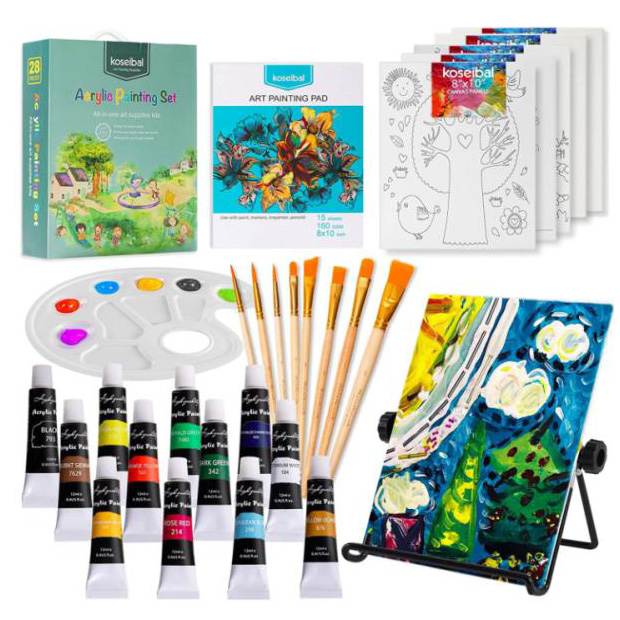
A Painting Board is typically a rigid painting surface designed to be more stable than loose paper while staying more portable (and often more cost-efficient) than stretched canvas. Most boards are built from four functional layers:
- Face layer: Commonly cotton canvas, canvas-textured fabric, or specialized paper.
- Core/backing: A rigid support (often paperboard, fiberboard, MDF-like board, or similar stiff backing).
- Primer/ground: Usually acrylic-based priming that controls absorption and improves paint adhesion.
- Edge treatment: The finishing that prevents fraying, denting, and peeling at corners.
If any one of these is inconsistent—especially priming and backing—users notice immediately: paint sinks, lines feather, corners curl, or the board bows. That’s why buyers who supply classrooms and kits often prioritize priming consistency and board rigidity over everything else.
3) How to Choose the Right Painting Board: A Practical Checklist
Use this checklist to select a Painting Board that fits your audience (kids, students, hobbyists, or advanced artists) and reduces the most common complaints.
- Rigidity and thickness: Thicker boards resist warping and feel more “premium” in-hand. If your users apply wet washes or heavy paint, prioritize stiffness.
- Priming quality: Look for even, opaque priming with reliable tooth (grip). Acid-free priming helps artwork stay cleaner over time.
- Surface texture: Medium texture is a practical all-rounder—enough grip for acrylic, not too rough for basic detail work.
- Edge durability: Strong corners and clean edges matter for shipping, storage bins, and classroom handling.
- Media compatibility: Confirm the board suits the paints your users actually use (acrylic, tempera, gouache, watercolor, and oil).
- Customization needs: For kits, printed outlines/designs can reduce beginner frustration and increase completion rates.
- Pack format: Multi-packs reduce per-unit cost and simplify distribution for schools, camps, and workshops.
If you’re sourcing for resale or programs, a consistent board saves money twice: fewer damaged units in transit and fewer “it’s the surface, not my skill” complaints from end users.
4) Matching the Board to Your Paint Medium
Different paints “ask” different things from a Painting Board. Here’s how to match them without guesswork.
- Acrylic: Works well on most primed boards. A medium-tooth, evenly primed surface helps acrylic sit on top with strong color and clean layering.
- Tempera: Often used by kids and classrooms. A board with reliable priming prevents blotchy patches and supports repeated repainting.
- Gouache: Benefits from a surface that’s not overly absorbent. Too-thirsty boards can make gouache look chalky and uneven.
- Watercolor: Water is the real stress test. If watercolor is your priority, choose a board made specifically for wet techniques or advise taping and controlled washes to reduce curling.
- Oil: Oil needs proper isolation. If users paint with oils, a well-primed board is essential, and an additional sealing/priming step can improve long-term stability.
For mixed-use environments (clubs, schools, family art time), a general-purpose Painting Board with reliable acrylic priming and a medium texture is usually the safest choice. It supports the widest range of paints and reduces failure cases.
5) Prep and Workflow Tips for Cleaner, Faster Results
Even a great Painting Board performs better with a few simple habits—especially in classrooms, workshops, and beginner kits.
- Flatten before you start: Store boards flat. If a board arrives with slight curve, stack it under weight overnight.
- Tape for clean borders: Use low-tack painter’s tape and remove it slowly at a shallow angle to reduce surface lift.
- Use a light sketch: Hard pressure can dent the primed layer. A softer pencil and light hand erase cleaner.
- Seal for oils (optional but smart): If oils are used, a thin extra ground layer can reduce staining and improve longevity.
- Control water load: For watercolor-style work on non-watercolor boards, use lighter washes and let layers dry fully.
- Protect corners in storage: Corners get crushed first. Store boards upright with corner guards or keep them flat in a rigid bin.
These steps don’t just improve results—they reduce waste. In high-volume programs, fewer ruined boards means fewer emergency reorders.
6) Quick Comparison Table: Board vs. Other Surfaces
| Surface Type | Best For | Main Strength | Common Frustration |
|---|---|---|---|
| Painting Board (rigid, primed) | Classes, kits, hobbyists, portable practice | Stable, easy to store/transport, consistent surface | Low-grade boards may warp or dent at corners |
| Stretched Canvas | Display-ready pieces, larger artwork | Traditional feel, deep edges, ready to hang | Bulk shipping damage, higher cost, storage space |
| Watercolor Paper | Wet techniques and washes | Designed for water control and pigment behavior | Curls easily without taping/stretching |
| Wood Panel | Ultra-smooth detail work, professional finishing | Very rigid, crisp edges, minimal flex | Heavier, can require extra prep, higher cost |
If your priority is “reliable results with minimal setup,” a quality Painting Board tends to be the most forgiving option—especially for mixed-skill groups.
7) Buying for Schools, Workshops, and Bulk Orders
Bulk purchasing changes what “quality” means. In a classroom or event setting, you care less about boutique finishes and more about consistency, durability, and user success. Here’s a procurement-minded checklist you can hand to a supplier or use to evaluate quotes.
| Requirement | Why It Matters | What to Ask For |
|---|---|---|
| Consistent priming | Prevents patchy coverage and frustration | Batch consistency controls and surface uniformity checks |
| Rigid backing | Reduces warping and shipping damage | Backing material details and thickness range |
| Kid-friendly formats | Makes projects easier to start and finish | Optional printed outlines/designs, set bundles |
| Protective packaging | Fewer crushed corners, fewer returns | Corner protection, carton strength, inner wrap options |
| Customization support | Branding and themed kits increase engagement | Artwork file requirements, color limitations, MOQ guidance |
If you’re looking for a supply partner that understands these realities, Ningbo Yongxin Industry co., Ltd. works with buyers who need dependable Painting Board options for art kits, educational programs, and bulk distribution. In practical terms, that means focusing on stable backing, reliable priming, and packaging that protects corners and surfaces during shipping—because that’s what actually prevents problems downstream.
8) Troubleshooting: Fast Fixes for Common Issues
-
Problem: Board warps during painting.
Fix: Use lighter water load, paint both sides lightly (if appropriate), dry flat, and store under weight. For repeated wet use, choose a more rigid Painting Board. -
Problem: Paint looks dull and uneven.
Fix: The surface may be overly absorbent. Apply a thin additional priming layer and let it cure fully before painting. -
Problem: Tape tears the surface.
Fix: Use low-tack tape and reduce adhesion by sticking it to fabric first. Remove slowly at a shallow angle. -
Problem: Edges fray or corners crush.
Fix: Use corner guards in storage and request stronger packaging. For frequent handling, prioritize sturdier edge finishing. -
Problem: Oil paint stains or shows “sink-in.”
Fix: Ensure proper priming/sealing and allow drying time between layers. A well-prepped board improves gloss and color stability.
9) FAQ
Q1: Is a Painting Board good for beginners?
A: Yes—especially when it’s rigid and evenly primed. Beginners benefit from predictable paint behavior and fewer surface-related failures.
Q2: Can a Painting Board handle watercolor?
A: Light washes often work fine, but heavy wet techniques can cause warping unless the board is designed for wet media. For frequent watercolor use, choose a board built for higher water load or use taping and controlled washes.
Q3: What texture should I choose?
A: Medium texture is a safe all-purpose choice. It grips paint well without making simple detail work feel “scratchy.” Very rough textures can frustrate fine-line work; ultra-smooth surfaces can reduce adhesion.
Q4: How do I reduce shipping damage in bulk orders?
A: Request corner protection, rigid inner packaging, and carton strength appropriate for stacking. Most damage occurs at corners and edges, not the center surface.
Q5: Are printed designs on a Painting Board worth it?
A: For kids’ kits and beginner programs, printed outlines can improve engagement and completion rates. They help users start confidently and reduce “blank page” anxiety.
Q6: How should I store boards to keep them flat?
A: Store them flat in a dry, stable environment. Avoid leaning them loosely against walls where gravity can slowly curve the board over time.
10) Next Step
If your goal is fewer warped surfaces, cleaner paint coverage, and a smoother experience for students or customers, it’s worth sourcing a Painting Board designed for consistent priming, sturdy backing, and reliable packaging. For bulk orders, custom designs, or kit-ready formats from Ningbo Yongxin Industry co., Ltd., contact us to discuss your target audience, preferred sizes, and packaging requirements—then we’ll help you match the right board specification to your real-world use.
Send Inquiry


X
We use cookies to offer you a better browsing experience, analyze site traffic and personalize content. By using this site, you agree to our use of cookies.
Privacy Policy