 English
- English
-
 Español
 -
 Português
 -
 русский
 -
 Français
 -
 日本語
日本語 -
 Deutsch
 -
 tiếng Việt
 -
 Italiano
 -
 Nederlands
 -
 ภาษาไทย
 -
 Polski
 -
 한국어
한국어 -
 Svenska
 -
 magyar
 -
 Malay
Malay -
 বাংলা ভাষার
 -
 Dansk
Dansk -
 Suomi
Suomi -
 हिन्दी
 -
 Pilipino
 -
 Türkçe
 -
 Gaeilge
 -
 العربية
 -
 Indonesia
 -
 Norsk
Norsk -
 تمل
تمل -
 český
český -
 ελληνικά
 -
 український
 -
 Javanese
 -
 فارسی
فارسی -
 தமிழ்
தமிழ் -
 తెలుగు
 -
 नेपाली
 -
 Burmese
 -
 български
 -
 ລາວ
ລາວ -
 Latine
 -
 Қазақша
 -
 Euskal
 -
 Azərbaycan
 -
 Slovenský jazyk
 -
 Македонски
 -
 Lietuvos
 -
 Eesti Keel
 -
 Română
 -
 Slovenski
 -
 मराठी
मराठी -
 Srpski језик
 -
 Esperanto
 -
 Afrikaans
 -
 Català
 -
 שפה עברית
 -
 Cymraeg
 -
 Galego
 -
 Latviešu
 -
 icelandic
 -
 ייִדיש
 -
 беларускі
 -
 Hrvatski
 -
 Kreyòl ayisyen
 -
 Shqiptar
 -
 Malti
Malti -
 lugha ya Kiswahili
 -
 አማርኛ
አማርኛ -
 Bosanski
 -
 Frysk
Frysk -
 ភាសាខ្មែរ
 -
 ქართული
 -
 ગુજરાતી
 -
 Hausa
Hausa -
 Кыргыз тили
 -
 ಕನ್ನಡ
ಕನ್ನಡ -
 Corsa
Corsa -
 Kurdî
Kurdî -
 മലയാളം
 -
 Maori
Maori -
 Монгол хэл
 -
 Hmong
Hmong -
 IsiXhosa
 -
 Zulu
Zulu -
 Punjabi
 -
 پښتو
پښتو -
 Chichewa
 -
 Samoa
Samoa -
 Sesotho
 -
 සිංහල
සිංහල -
 Gàidhlig
 -
 Cebuano
 -
 Somali
 -
 Тоҷикӣ
 -
 O'zbek
 -
 Hawaiian
 -
 سنڌي
سنڌي -
 Shinra
 -
 Հայերեն
 -
 Igbo
Igbo -
 Sundanese
 -
 Lëtzebuergesch
 -
 Malagasy
 -
 Yoruba
 -
 简体中文
简体中文 -
 繁体中文
繁体中文


How Does a Trolley Bag Make Carrying Heavy Loads Easier Without Sacrificing Durability?
Article Summary
A Trolley Bag looks simple—until you start buying or designing one at scale and realize how many small details can make or break the user experience. This guide walks through the most common customer pain points (wobbly wheels, broken handles, tipping, uncomfortable straps, poor organization, and short product life), then turns them into clear decisions you can use when selecting a model, improving a design, or sourcing from a factory. You’ll also get a practical checklist, a buyer-focused comparison table, and an FAQ to help you choose a Trolley Bag that survives real-world abuse and keeps users happy.
Contents
- Outline
- The customer pain points that actually drive returns
- Choosing the right type of Trolley Bag for the job
- Build quality fundamentals that decide the lifespan
- Wheels and handle systems that won’t quit
- Comfort and usability details people notice on day one
- Organization features that reduce “bag chaos”
- Branding and customization without quality surprises
- Quality checks and tests buyers should ask for
- Sourcing tips for smoother production and fewer disputes
- Fast decision checklist
- FAQ
Outline
- Translate user complaints into product requirements
- Match the bag type to the user scenario (school, travel, work, shopping)
- Focus on the “failure triangle”: wheels, handle, and base structure
- Improve comfort and organization so users stick with the product
- Reduce defects and returns with clear specs and practical testing
- End with a checklist you can use before placing an order
The customer pain points that actually drive returns
Most unhappy buyers don’t complain about “materials” or “construction.” They complain about outcomes: a handle that sticks, wheels that rattle, seams that burst, or a bag that tips over and drags on stairs. If you’re selecting a Trolley Bag for retail, school programs, corporate use, or import distribution, your best move is to start from these pain points and make sure each one has a design response.
| Customer Complaint | What Usually Causes It | What to Look for in a Better Trolley Bag |
|---|---|---|
| Wheels break or wobble quickly | Weak axle, thin wheel housing, poor wheel material, uneven base | Reinforced wheel mounts, durable wheel material, stable base panel |
| Handle jams, bends, or feels loose | Thin tubes, weak locking mechanism, poor alignment | Firm lock positions, smoother rails, sturdy handle tubes |
| Bag tips over when standing | High center of gravity, narrow wheel width, soft base | Wider wheel stance, structured base, balanced compartment layout |
| Fabric frays or tears at corners | Low abrasion resistance, unprotected edges, weak binding | Edge guards, reinforced corners, higher abrasion fabrics |
| Straps hurt when carried on the back | Thin padding, bad strap angle, poor back panel structure | Thicker padding, breathable back panel, ergonomic strap placement |
| Zippers fail and snag | Low-quality zipper chain, weak sliders, poor stitching at ends | Smoother zipper action, reinforced zipper ends, reliable zipper type |
A strong Trolley Bag isn’t only “strong material.” It’s a system where stress points are reinforced, moving parts are built for repetition, and the bag behaves well in the messy real world: sidewalks, stairs, school corridors, airports, and bus stops.
Choosing the right type of Trolley Bag for the job
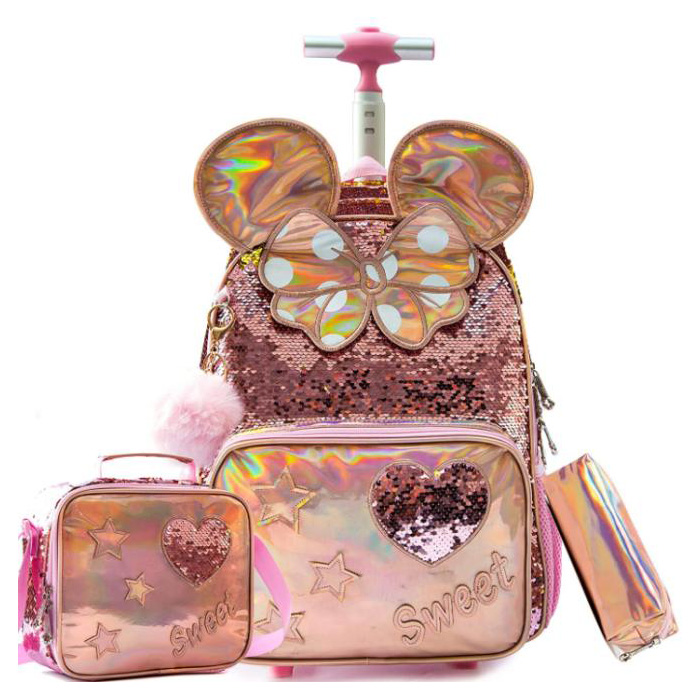
“Trolley bag” can mean different things depending on your market. Clarifying the use case helps you avoid spec confusion and mismatched expectations. Here are common categories and the questions buyers should answer before selecting a model.
- Wheeled backpack trolley bag: Ideal for students and commuters who switch between rolling and carrying.
- Carry-on style trolley bag: Built for travel, often with more rigid structure and smoother rolling needs.
- Shopping-style trolley bag: Prioritizes volume and stability for groceries and daily errands.
Key decision prompts
- Will users roll it most of the time, or carry it upstairs and over curbs?
- Do they need a backpack mode that’s comfortable for more than a few minutes?
- Will it be used on smooth floors, rough sidewalks, or both?
- Is the priority a compact footprint, or maximum capacity?
If the main user is a child, rolling stability and handle height range become critical. If it’s travel-focused, wheel smoothness, handle rigidity, and packing efficiency tend to matter most. A Trolley Bag that fits the real routine wins repeat buyers.
Build quality fundamentals that decide the lifespan
Durability comes from how the bag is engineered at stress points—especially where fabric meets hard components. When evaluating a Trolley Bag, treat it like a product made of two worlds: soft goods (fabric, foam, webbing) and hardware (wheels, handle, base, fasteners). The failures often happen where those worlds connect.
High-impact areas to reinforce
- Bottom corners: Dragging and curb hits destroy weak edges fast.
- Wheel housing seams: Vibration plus load can tear stitching over time.
- Handle anchor points: Repeated pulling stresses fabric and internal panels.
- Top carry handle: People grab it suddenly with weight inside—this area needs extra stitching and backing.
Material choices that affect real performance
- Outer fabric: Look for abrasion resistance and easy cleaning (especially for school and commute use).
- Lining: A stronger lining reduces internal tearing and improves the “premium feel.”
- Base panel: A structured base helps stability and prevents sagging.
- Thread and stitching density: Better stitching holds shape and fights seam separation.
A dependable Trolley Bag usually feels “quiet” when you test it: less rattling, fewer loose parts, and better shape retention when loaded. Those small impressions are often the same details that reduce customer complaints months later.
Wheels and handle systems that won’t quit
If you only have time to verify two things, verify wheels and handle mechanics. These are the most repeated motion parts—meaning they face the highest cycle counts. A Trolley Bag can look great on a shelf and still fail quickly if the rolling system is underbuilt.
Wheel considerations
- Wheel diameter: Larger wheels generally handle bumps better; smaller wheels can struggle on rough surfaces.
- Wheel mount strength: The bracket and housing matter as much as the wheel itself.
- Noise control: Poor wheel material or loose mounts cause the “rattle” that customers hate.
- Replaceability: For some markets, replaceable wheels can reduce long-term service issues.
Telescopic handle considerations
- Locking stability: The handle should lock firmly at each height without wobble.
- Rail alignment: Misaligned rails cause sticking and uneven wear.
- Grip comfort: A comfortable grip matters more than people think, especially for longer rolling sessions.
- Height range: Too short causes slouching; too tall feels awkward and unstable.
A simple field test: load the bag, extend the handle fully, and roll it quickly with turns. If it twists, rattles, or feels unstable, users will notice immediately. That’s the moment a “nice-looking” Trolley Bag becomes a return.
Comfort and usability details people notice on day one
Many trolley designs overlook the reality that rolling isn’t always possible. People carry bags into classrooms, up stairs, onto buses, or through crowded spaces. So the “backup comfort” matters—especially for wheeled backpack styles.
Comfort features to prioritize
- Back panel structure: Helps the bag keep shape and prevents hardware from pressing into the back.
- Strap padding: Not just thick—well-shaped padding distributes pressure better.
- Strap placement: Proper angle reduces shoulder strain and improves balance.
- Breathability: A breathable panel can make daily use feel dramatically better.
Usability “small wins”
- Easy grab points: A reliable top handle and side handle help lifting without awkward tugging.
- Stable standing: A bag that stands on its own reduces daily frustration.
- Balanced compartments: Keeps heavy items low and centered, improving roll stability.
These details aren’t just comfort—they’re trust builders. A Trolley Bag that behaves predictably quickly becomes someone’s “default bag,” which is exactly what brands want when aiming for repeat purchases and referrals.
Organization features that reduce “bag chaos”
Customers rarely say “I want a better internal layout.” They say, “I can’t find anything,” or “my stuff gets crushed,” or “everything ends up mixed together.” Smart organization solves this without adding unnecessary complexity.
- Main compartment capacity: Big enough for core items without forcing overstuffing.
- Front quick-access pocket: For small items users reach for constantly.
- Separate sections: Helps keep clean items separate from messier items (snacks, shoes, chargers).
- Internal organizers: A few purposeful sleeves or mesh pockets beat a maze of tiny compartments.
- Water bottle pockets: Reinforced stitching matters here because these pockets get pulled hard over time.
For school-focused products, a layout that protects books and keeps weight close to the wheels can reduce tipping. For travel, a layout that keeps essentials accessible reduces stress during security checks and quick transfers. The best Trolley Bag designs feel intuitive even when users are rushed.
Branding and customization without quality surprises
Customization is often where quality slips—because changes introduce new materials, new suppliers, and new failure modes. If you’re building a branded Trolley Bag line, define exactly what “custom” means from the start.
Common customization options
- Logo methods (embroidery, printing, patches)
- Colorways and pattern artwork
- Hardware color and trims
- Compartment layout tweaks
- Wheel/handle style variations
- Packaging and labeling
How to keep customization safe
- Request material confirmation samples for any new fabric, zipper, or wheel component
- Confirm color matching under real lighting (not only factory lighting)
- Lock the handle/wheel spec early to avoid late-stage substitutions
- Document critical measurements (base width, handle height range, wheel spacing)
Many buyers work with partners like Ningbo Yongxin Industry co., Ltd. to streamline custom development while maintaining consistent production standards. The key is clarity: define the “must-not-change” specs (usually wheels, handle, base structure, zipper quality) and treat everything else as flexible.
Quality checks and tests buyers should ask for
You don’t need complicated lab language to reduce risk. You need clear checks that reflect real usage. If you’re importing or distributing a Trolley Bag, ask for proof of practical testing and consistent inspection steps.
Practical tests worth requesting
- Rolling test: Loaded rolling across different surfaces to check vibration and wheel stability
- Handle cycle test: Repeated extend/retract cycles to verify locking and smoothness
- Drop test: Controlled drops when loaded to evaluate base and corner protection
- Seam stress check: Focused inspection on wheel housing seams, top handle, strap anchors
- Zipper function test: Repeated open/close to catch snagging early
Inspection checkpoints that reduce disputes
- Pre-production sample approval (including hardware and colors)
- In-line inspection for stitching, alignment, and hardware installation
- Final random inspection for function and appearance consistency
- Packaging checks to prevent transit damage to wheels and handles
These steps protect both sides: buyers get fewer returns, and factories avoid costly rework caused by unclear expectations. A strong Trolley Bag program is built on repeatable checks, not hope.
Sourcing tips for smoother production and fewer disputes
Sourcing goes wrong when details stay “assumed.” The most reliable outcomes happen when specs are written clearly and verified early. Here are buyer-friendly tips that typically reduce friction:
- Define the use case: school daily use, travel, shopping, or mixed. This affects wheel and base choices.
- Write down the non-negotiables: wheel construction, handle rigidity, zipper type, base structure, and corner reinforcement.
- Agree on acceptable tolerances: slight color variance, minor stitching variation, and packaging rules.
- Confirm lead time assumptions: sampling time, material procurement time, and production time are different stages.
- Ask for a clear packing method: poor packing can damage wheels and handles even if production is good.
When these points are handled up front, the Trolley Bag you approve as a sample is much more likely to match the mass production you receive.
Fast decision checklist
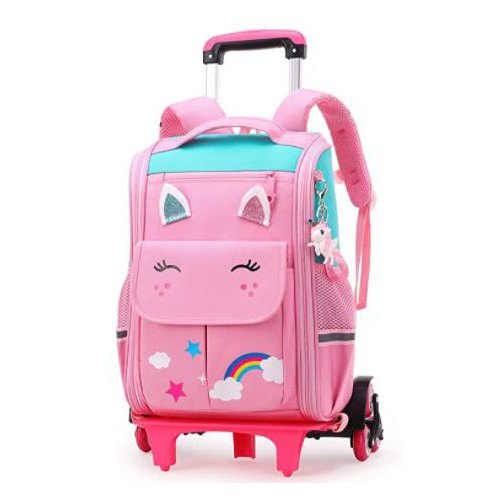
Use this checklist before you place an order or commit to a design revision:
- Does the bag remain stable and upright when loaded?
- Do the wheels feel smooth and quiet under weight?
- Does the telescopic handle lock firmly at each height?
- Are high-wear areas reinforced (corners, wheel housing seams, top handle, strap anchors)?
- Is the backpack mode comfortable enough for real daily use?
- Is the internal layout simple and practical (not cluttered, not empty)?
- Are zippers and pulls easy to use repeatedly without snagging?
- Is the packing method designed to protect wheels and handles during transit?
If you can answer “yes” to most of the above, you’re usually in a strong position to deliver a Trolley Bag that customers keep—and recommend.
FAQ
How do I know if a Trolley Bag is truly durable before buying in bulk?
Ask for function-focused proof: rolling tests with weight, handle cycle checks, and close-up inspection of stress points (wheel mounts, handle anchors, corners, and zipper ends). A sample that feels stable and quiet under load is usually a better sign than appearance alone.
Which features reduce tipping and wobbling the most?
A wider wheel stance, a structured base panel, and a compartment layout that keeps heavy items lower and centered. If the bag stands reliably when loaded, it typically rolls more predictably too.
What causes telescopic handles to jam or loosen?
Misaligned rails, weak locking mechanisms, and thin tubing are common culprits. Repeated extension under load exposes these weaknesses quickly, so handle cycle checks are extremely helpful.
Is a wheeled backpack style comfortable enough to carry?
It can be—if the back panel is structured, straps are properly padded, and hardware is designed not to press into the user’s back. If the bag is only “rollable” but miserable to carry, users will complain during stairs, buses, and crowded spaces.
What should I prioritize for a kids-focused Trolley Bag?
Stability, appropriate handle height range, comfortable straps, and reinforced corners. Kids are tough on moving parts, so wheels and handle construction matter even more than decorative elements.
How can I customize a Trolley Bag without raising defect risk?
Lock the critical hardware specifications early, confirm new materials with approval samples, and document measurements and acceptable tolerances. Customization is safest when “must-not-change” specs are protected.
Conclusion
A great Trolley Bag is not just a bag with wheels—it’s a daily tool that needs to roll smoothly, stand stable, carry comfortably, and survive repeated stress. When you select models based on real customer pain points and verify the wheel-handle-base system carefully, you’ll reduce returns, improve reviews, and build a product line that earns trust.
If you’re planning a new Trolley Bag project or want to develop customized options with reliable manufacturing support, contact us to discuss your target market, feature requirements, and branding needs—so you can launch with confidence and deliver a better experience from day one.
Send Inquiry


X
We use cookies to offer you a better browsing experience, analyze site traffic and personalize content. By using this site, you agree to our use of cookies.
Privacy Policy