 English
- English
-
 Español
 -
 Português
 -
 русский
 -
 Français
 -
 日本語
日本語 -
 Deutsch
 -
 tiếng Việt
 -
 Italiano
 -
 Nederlands
 -
 ภาษาไทย
 -
 Polski
 -
 한국어
한국어 -
 Svenska
 -
 magyar
 -
 Malay
Malay -
 বাংলা ভাষার
 -
 Dansk
Dansk -
 Suomi
Suomi -
 हिन्दी
 -
 Pilipino
 -
 Türkçe
 -
 Gaeilge
 -
 العربية
 -
 Indonesia
 -
 Norsk
Norsk -
 تمل
تمل -
 český
český -
 ελληνικά
 -
 український
 -
 Javanese
 -
 فارسی
فارسی -
 தமிழ்
தமிழ் -
 తెలుగు
 -
 नेपाली
 -
 Burmese
 -
 български
 -
 ລາວ
ລາວ -
 Latine
 -
 Қазақша
 -
 Euskal
 -
 Azərbaycan
 -
 Slovenský jazyk
 -
 Македонски
 -
 Lietuvos
 -
 Eesti Keel
 -
 Română
 -
 Slovenski
 -
 मराठी
मराठी -
 Srpski језик
 -
 Esperanto
 -
 Afrikaans
 -
 Català
 -
 שפה עברית
 -
 Cymraeg
 -
 Galego
 -
 Latviešu
 -
 icelandic
 -
 ייִדיש
 -
 беларускі
 -
 Hrvatski
 -
 Kreyòl ayisyen
 -
 Shqiptar
 -
 Malti
Malti -
 lugha ya Kiswahili
 -
 አማርኛ
አማርኛ -
 Bosanski
 -
 Frysk
Frysk -
 ភាសាខ្មែរ
 -
 ქართული
 -
 ગુજરાતી
 -
 Hausa
Hausa -
 Кыргыз тили
 -
 ಕನ್ನಡ
ಕನ್ನಡ -
 Corsa
Corsa -
 Kurdî
Kurdî -
 മലയാളം
 -
 Maori
Maori -
 Монгол хэл
 -
 Hmong
Hmong -
 IsiXhosa
 -
 Zulu
Zulu -
 Punjabi
 -
 پښتو
پښتو -
 Chichewa
 -
 Samoa
Samoa -
 Sesotho
 -
 සිංහල
සිංහල -
 Gàidhlig
 -
 Cebuano
 -
 Somali
 -
 Тоҷикӣ
 -
 O'zbek
 -
 Hawaiian
 -
 سنڌي
سنڌي -
 Shinra
 -
 Հայերեն
 -
 Igbo
Igbo -
 Sundanese
 -
 Lëtzebuergesch
 -
 Malagasy
 -
 Yoruba
 -
 简体中文
简体中文 -
 繁体中文
繁体中文


Is the Modern Shopping Bag Redefining Consumer Utility and Sustainability Standards?
The global landscape of portable carrying solutions has witnessed a transformative shift over the last decade. Among the most ubiquitous yet rapidly evolving items in this sector is the shopping bag. No longer a mere afterthought at the point of sale, this essential accessory has become a focal point for material innovation, structural ergonomics, and brand storytelling. For professionals engaged in the design and distribution of daily carry goods, understanding the new parameters governing the bag market is critical. The convergence of retail demand, environmental regulations, and multi-functional use cases has propelled this category beyond simple cloth or plastic receptacles.
Redefining Material Integrity in Everyday Carry Solutions
One of the most notable transformations in this field is the departure from single-use paradigms. Contemporary designs emphasize closed-loop life cycles, where a shopping bag is engineered to withstand hundreds of uses without degradation in tensile strength or seam integrity. Advanced woven polypropylene, recycled PET textiles, and even bio-based polymers now dominate the raw material landscape. Manufacturers are investing in stress-point reinforcements—particularly at handle junctions and base panels—which historically represented failure zones. This engineering focus ensures that a single unit can transition from grocery hauls to library loads, effectively displacing dozens of disposable alternatives. Furthermore, surface treatment technologies such as water-repellent laminates and anti-microbial coatings have expanded the functional window, allowing the same item to serve in humid environments or high-contact urban scenarios. The industry is also witnessing a quiet revolution in fastener systems: magnetic snap closures, self-repairing zippers, and adjustable cinch tops are becoming standard features, turning a simple carrier into a versatile lifestyle tool.
Structural Adaptability and Load Distribution
Beyond raw materials, geometric design has taken center stage. A well-constructed bag now often includes collapsible rigid bases, internal bottle separators, and convertible strap systems that allow for shoulder, cross-body, or hand-carry configurations. This adaptability is not accidental—it directly addresses how modern consumers move between retail environments, public transit, and pedestrian zones. Load distribution is no longer left to chance; padded shoulder interfaces and wide-bottom gussets are calculated to reduce focal pressure, enhancing both comfort and longevity. Some premium iterations incorporate external lash points for attaching umbrellas or yoga mats, blurring the line between a shopping-specific item and a general utility carrier. The rise of hybrid designs—where a thermal liner can be zipped in or out—further showcases the sector's responsiveness to real-world usage patterns. For exporters, these structural nuances represent key differentiation factors in saturated markets.
Regulatory and Logistical Drivers Shaping Production
Global legislative movements have accelerated the transition from flimsy, high-waste carriers to durable, reusable architectures. Numerous jurisdictions have implemented mandatory minimum fabric weights, seam testing protocols, and labeling requirements for any product marketed as a reusable carrying solution. Consequently, manufacturers have adopted standardized test methods for handle pull strength, bottom load capacity, and accelerated aging under UV exposure. These regulations effectively raise the barrier to entry, rewarding producers with rigorous quality management systems. From a logistical perspective, foldability and stackability have become non-negotiable attributes. A modern design must reduce shipping volume by at least a factor of ten compared to its expanded state, allowing container efficiency that reduces both carbon footprint and freight costs. This has spurred innovation in origami-like folding patterns and self-stowing pouches integrated into the bag's own structure. Export documentation now frequently includes declarations of compliance with specific national or regional durability norms, underscoring the shift from disposable commodity to engineered product.
Supply Chain Transparency and Ethical Sourcing
Another parallel development is the demand for verifiable sourcing. Large-scale retailers and brand licensors increasingly require batch-level traceability of textiles, webbing, and hardware. This has led to the adoption of blockchain-adjacent ledger systems for raw material certificates, ensuring that each shopping bag can be traced back to its fiber origin. Ethical manufacturing certifications—such as SMETA or BSCI—are no longer optional for suppliers aiming at Western or APAC markets. The implication for design is profound: designers must select materials not only for functional performance but also for auditability and low environmental impact. Water-based inks for printing, nickel-free metal components, and non-phthalate PVC alternatives have moved from niche to normative. These elements, while often invisible to the end user, form the backbone of B2B negotiations and long-term partnership agreements. For any serious export enterprise, aligning with these standards is the baseline for market access.
Market Segmentation and End-Use Specialization
The broad category has splintered into distinct sub-niches, each with unique performance criteria. For instance, the boutique retail segment demands high grammage cotton canvas with leather accenting and discrete branding, whereas the promotional products channel prioritizes cost-effective polyester non-wovens with large printable surface areas. E-commerce fulfillment has spurred demand for mailer-style designs with tamper-evident closures. Conversely, the outdoor and recreational trade favors ripstop fabrics and daisy-chain webbing for carabiner attachment. Understanding these divergences is essential for any export-oriented manufacturer aiming to serve multiple customer tiers. Below is a comparative overview of key attributes across three major market segments that utilize reusable carrying solutions:
| Application Sector | Primary Material Preference | Critical Feature Set | Durability Expectation |
|---|---|---|---|
| Food & Grocery | Non-woven polypropylene, RPET | Water-resistant lining, insulated compartment, wide opening | High-frequency usage, easy to sanitize |
| Fashion & Apparel Retail | Cotton canvas, jute, or recycled leather | Minimalist aesthetics, reinforced handles, magnetic closure | Long-term as a fashion accessory |
| Promotional & Trade Events | Spunbond non-woven, laminated PP | Large print area, cost efficiency, collapsible | Moderate usage, brand visibility focus |
Performance Testing Protocols Across Segments
Industry standards now prescribe specific test regimes depending on the intended end use. For a shopping bag destined for heavy-load grocery applications, cyclic load testing of at least twenty kilograms for one thousand cycles is common. For fashion-oriented units, colorfastness to light and crocking takes precedence. Exporters must maintain in-house or third-party testing capabilities to certify these parameters. Seam strength is evaluated separately from fabric strength because thread type, stitch density, and seam construction (e.g., French seam vs. overlock) significantly affect overall robustness. Additionally, environmental chambers are employed to simulate tropical, arid, or temperate storage conditions, measuring dimensional stability and hardware corrosion resistance. These technical requirements underscore that a successful product is not simply a fabric enclosure but a system of interacting components, each validated against objective benchmarks.
Design Innovation and User Experience Evolution
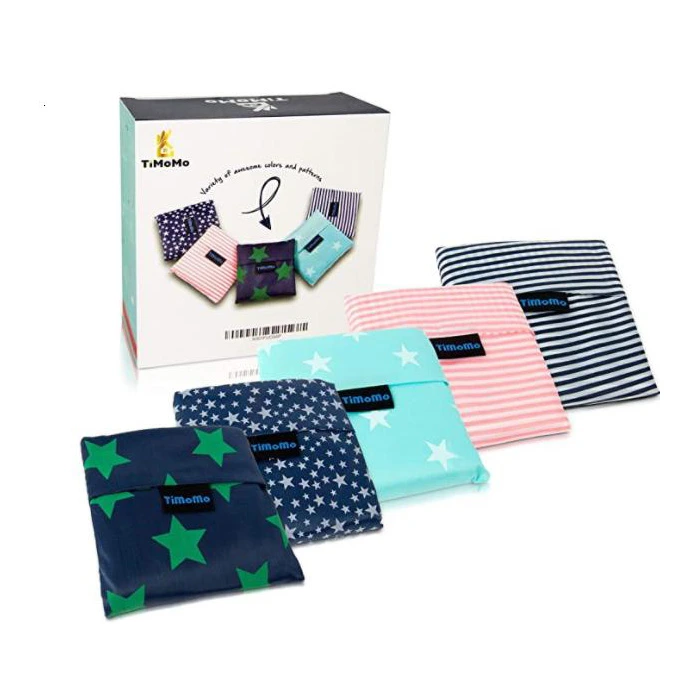
Ergonomic studies have influenced handle drop lengths, strap widths, and grip textures. The ideal handle drop allows the bag to clear a shoulder when worn while still being manageable in hand. Widths above two inches distribute load effectively across the palm, reducing fatigue. Some designs incorporate a secondary shorter handle drop for when the bag is heavily loaded and must be carried close to the body. User feedback loops have also introduced features like key clips, water bottle sleeves with elastic retention, and external zippered pockets for valuables. These details may seem incremental, but they collectively elevate a generic item into a preferred daily companion. Another notable innovation is the development of collapsible structures that unfold from a palm-sized pouch to a full-volume carrier within seconds, then fold back just as easily. This 'self-stowing' capability addresses the classic user pain point of remembering to bring a reusable bag—it can live permanently in a purse or glove compartment without taking up significant space.
Printing and Branding Without Surface Damage
For many brand owners, the bag serves as a mobile billboard. However, aggressive printing methods can compromise fabric weave integrity or coating adhesion. The industry has thus refined sublimation, screen printing, and heat transfer techniques specifically for low-elongation substrates. Water-based inks that bond without creating a stiff hand feel are preferred. Moreover, some manufacturers have introduced direct digital printing on finished bags, enabling short-run customization without screen setup costs. This has opened the door for seasonal or event-specific designs with zero minimum order quantity constraints. For the export community, offering such low-volume, high-variety capabilities can be a powerful value proposition, allowing clients to test markets or run targeted campaigns without inventory risk. The technical challenge lies in maintaining color consistency across different material batches and printing locations—a problem solved by rigorous spectrophotometric calibration and standardized substrate pretreatment.
Company Spotlight: Engineering Excellence from Ningbo
Within this sophisticated global landscape, one enterprise that has consistently demonstrated alignment with these advanced requirements is Ningbo Yongxin Import and Export. Established in 2007 and strategically located in Ningbo—a hub renowned for its logistical infrastructure and manufacturing ecosystem—the company has cultivated deep expertise in the development of durable, design-forward carry solutions. Their portfolio, which extends across Lunch Bag Backpacks, Pencil Cases, Trolley Bags, Kids' DIY Art Crafts, educational toys, and children's DIY kits, is underpinned by a philosophy of rigorous quality assurance. All products comply with international quality standards, a testament to their commitment to precision engineering and material integrity. While their range is diverse, their approach to each product category, including reusable carrying solutions, reflects an understanding of global regulatory frameworks and user-centered design. The geographical advantage of their Ningbo base facilitates efficient logistics and responsive supply chain management, ensuring that partners receive consistent, certified goods. Their appreciation across various international markets is not accidental—it is the outcome of systematic investment in testing protocols, ethical sourcing, and adaptable manufacturing lines. For any sourcing partner seeking a reliable ally in the modern era of utility products, Ningbo Yongxin Import and Export represents a confluence of experience, location, and uncompromising quality ethos.
Future Outlook: Intelligent and Adaptive Carry Systems
Looking ahead, the integration of passive and active functionalities is likely to accelerate. We can anticipate RFID-blocking compartments, integrated weighing scales (using flexible strain sensors), and even solar-assisted charging pockets for small electronics. These will coexist with fundamental requirements of low weight and high collapsibility. Material science will deliver fabrics that change color based on load stress as a safety indicator or self-heal minor punctures via embedded microcapsules. The baseline, however, will remain the same: a shopping bag must first and foremost be a reliable, repeat-use vessel. The evolution from a commodity to an engineered solution is complete, and the pace of innovation shows no sign of slowing. Exporters and manufacturers who can blend regulatory compliance, ergonomic intelligence, and adaptive design will define the next generation of everyday carry equipment.
Send Inquiry


X
We use cookies to offer you a better browsing experience, analyze site traffic and personalize content. By using this site, you agree to our use of cookies.
Privacy Policy